

The Problem Usually Starts Small
A company with 10 employees can probably manage apparel with a spreadsheet and a few emails. Someone asks everyone for their shirt size, marketing orders 20 polos, and a box arrives at the office. It is not elegant, but it works.
Then the company grows. There are 50 employees instead of 10, some work remotely, others are assigned to projects hours away from headquarters, and maybe a second office opens. Field employees need different gear than office employees, leadership wants higher-end apparel for client-facing staff, and new hires arrive throughout the year.
Those are all good problems for a growing company to have, but now marketing has an Excel sheet containing everybody’s sizes, except three people never responded and somebody has lost 30 pounds since the last order, and a new hire starts next week. The process starts consuming time that nobody planned to spend on clothing.
A company store removes much of that friction because employees select their own items, choose their own sizes, provide the correct shipping information, and place their orders themselves from a catalog that marketing has already approved. It shifts marketers from processing individual orders to managing the overall system.
Employees Already Know How to Use an Online Store
One of the biggest advantages is also the simplest: nobody has to teach an employee how to order a jacket online.
Employees select the item, pick their size, choose any approved options, enter or confirm their shipping information, and complete the order. The experience is essentially the same as buying something from any other e-commerce site.
That eliminates one of the most annoying recurring jobs for marketing and administrative teams: collecting sizes. Instead of emailing 75 people asking for polo, jacket, vest, and T-shirt sizes and then trying to reconcile the responses, employees are responsible for selecting what actually fits them.
The same applies to delivery. Most companies I work with consolidate orders to their respective offices, while remote employees can have items shipped directly to them. Marketing no longer needs to receive six boxes at headquarters and spend an afternoon figuring out how to get one jacket to a superintendent working three states away.
More importantly, marketing’s purpose is to help the company grow. Moving repetitive, time-consuming, non-revenue-generating fulfillment tasks to a trusted outside partner gives marketers more time to focus on positioning, business development support, recruiting, content, campaigns, and the other work that actually drives the business forward.
Give Employees Freedom to Choose Without Giving Up Brand Control
A company store solves another common tension. Employees generally appreciate branded apparel more when they have some choice, while marketing and leadership still need to control how the company’s brand and image are represented in public.
A store gives you both.
Many construction companies provide each employee with an annual apparel stipend or credit. Instead of giving everyone the exact same shirt, employees can choose from an approved collection of polos, button-downs, T-shirts, jackets, vests, hats, and other items.
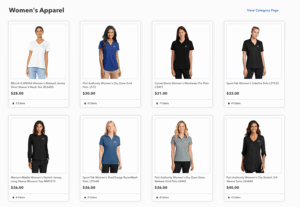 One employee may want a quarter-zip while another would rather have a jacket. Someone who always wears long sleeves can choose accordingly, while another employee may prefer polos. Let’s not forget female employees can pick out options that actually fit their bodies instead of being forced to wear the same polo shirt as everyone else. Employees can often purchase additional approved items for themselves or their families after using their company allowance.
This also works well for recognition and bonuses. Instead of giving everyone the same piece of swag, a company can award store credit and let the employee choose something they will actually use.
Marketing controls the catalog, products, and designs, while leadership determines the budget. That is a much better division of responsibility than asking the marketing coordinator to become everyone’s personal shopper.
A Store Protects Your Brand Identity
Construction companies accumulate old branded material surprisingly quickly. There is the current logo, the previous logo, the version somebody stretched horizontally, the old safety vest that uses the wrong shade of blue, the polo embroidered by a local vendor who recreated the mark instead of asking for the artwork, and the project sign using a logo that was retired four years ago.
It happens because physical brand assets are often decentralized. A superintendent needs something quickly and orders it locally. An office manager has a vendor they have used forever. A project manager finds an inexpensive website. Someone sends the wrong artwork because it is the first logo file they find.
A company store dramatically reduces that problem because employees are selecting from products and designs that have already been approved. Marketing can control the logo, colors, placement, product quality, decoration method, artwork, and available options before anything is ordered.
When the brand changes, marketing updates the store rather than chasing old artwork throughout the company. I have also seen contractors use apparel buy-back programs during a rebrand, where employees turn in old company apparel and receive credit toward new apparel. That helps remove obsolete logos from circulation much faster without making the transition feel punitive.
It Also Controls Your Vendors
Vendor sprawl is another hidden headache. One office uses a local embroiderer. Another orders promotional products online. Operations has a favorite sign company. HR orders new-hire items somewhere else, and somebody has an account with a national promotional-products website.
Individually, each decision may be reasonable. Collectively, they create inconsistent quality, inconsistent pricing, duplicate vendors, multiple invoices, and almost no control over the company’s physical brand.
A company store lets you consolidate much of that spending through a smaller number of trusted vendors. That does not mean one vendor has to manufacture everything, because a good store provider can manage the supplier relationships behind the scenes while employees experience one ordering system.
For a multi-office or multi-brand company, that single pane of glass becomes particularly valuable. Marketing can see what is available, employees know where to order, leadership knows where the money is going, accounting deals with fewer purchasing processes, and individual offices have less reason to create their own solutions.
A well-designed store can also collect variable information during checkout, such as office, department, project number, job cost code, or other accounting data. That makes cost allocation and invoicing considerably easier for accounts payable instead of requiring someone to decipher every order after the fact.
Apparel Is the Best Place to Start
I would not try to move every physical branded item into a store on day one. Start with the biggest pain point, which for many contractors is apparel because it creates the most sizing issues, employee requests, and administrative work.
Get that working first, then add other categories as the need becomes clear. Over the next year, that might include PPE, jobsite signage, promotional products, new-hire kits, awards, event materials, stationery, or temporary campaigns.
This approach is easier for employees too. They become accustomed to using the store for apparel before additional categories and workflows are introduced.
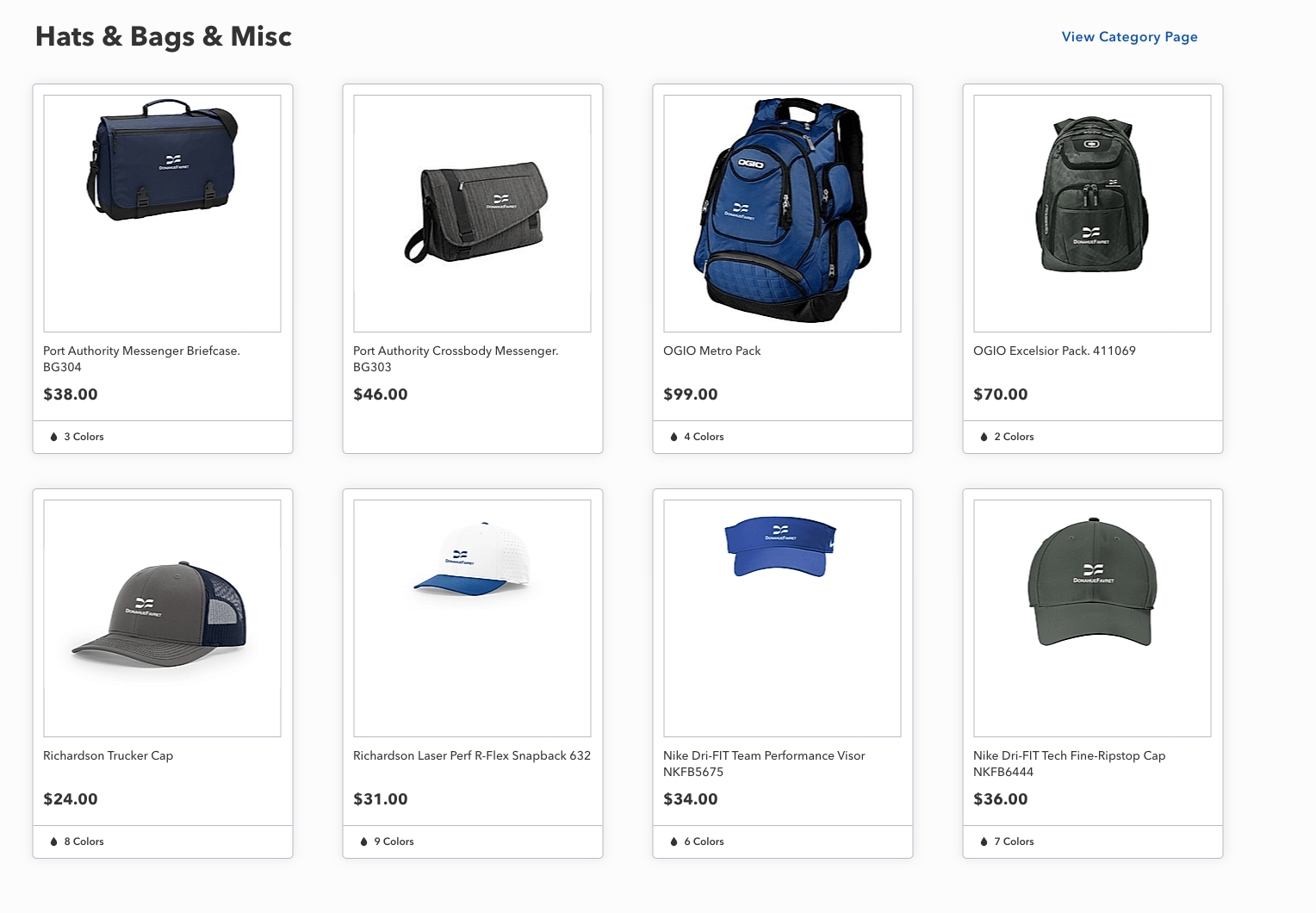
PPE Belongs in the System Too, but It May Need Its Own Rules
PPE is a natural extension, particularly for contractors with a large field workforce, but it operates differently from optional employee apparel. Required safety equipment is company-funded and may need different controls, approvals, and fulfillment rules.
Depending on the organization, PPE can live in a standalone store or in a protected section of the main store that employees access through an approved code or allowance. This keeps company-paid safety purchases separate from an employee’s apparel stipend while maintaining one familiar ordering experience.
The company can maintain approved branded hard hats, safety vests, gloves, field shirts, and other gear alongside non-branded safety items employees routinely need. This can be particularly helpful during onboarding because essential PPE and new-hire gear can be kept in inventory and ready when the employee starts.
A hybrid inventory model usually makes the most sense. Keep stock of the PPE and essential gear needed continually, place bulk apparel orders a few times per year for better pricing, and use print-on-demand where the added flexibility is worth a slightly higher unit cost.
The store remains the interface even though the purchasing rules and fulfillment methods behind different products may vary.
Jobsite Signage Is a Great Next Step
This is one of the applications construction companies often overlook. If every jobsite needs signage, why should every project team reinvent the ordering process?
A centralized signage store can standardize items such as:
 Fence mesh and banners
- Wayfinding
- Project identification
- Safety requirements
- Visitor check-in
- Surveillance notices
- Restricted-access areas
- Recruiting signage
- Project-team signs
- Community information
- Other frequently used site graphics
Using one trusted signage partner that can ship nationally means the sign installed in Texas can look like the one installed in Florida, Minnesota, or Louisiana. Marketing gets involved in developing and approving the design system once instead of recreating or correcting signs project by project.
The project team selects what it needs, enters the project-specific information, and has the signage delivered directly to the jobsite. The project pays for it, while marketing maintains control over the design and approved artwork.
When I CMO at REX Construction, REI Promos developed a store specifically around jobsite signage and it saved my marketing team 5-10 hours per project. It is a good reminder that a “company store” should not be thought of only as a place to buy polo shirts, it can solve a real construction operations problem.
Multi-Brand Companies Benefit Even More
The administrative case gets stronger when one organization owns multiple brands. I worked with a national ESOP with five different brands using a store structure to help manage apparel across the organization. Without a centralized system, imagine the potential complexity: five logos, different colors, multiple employee groups, separate budgets, numerous apparel choices, and employees spread around the country.
A company store gives marketing and leadership one place to manage the system while preserving the distinct identity of each brand. That becomes increasingly useful as construction companies grow through acquisitions.
Also, an acquirer does not necessarily want every acquired company to adopt the same name immediately. A store allows the parent organization to centralize purchasing and administration without forcing every business into the same visual identity.
One backend can support multiple brands without creating five separate administrative headaches.
Stores Are Useful for Temporary Campaigns Too
Not every store needs to live forever. A heavy civil contractor client developed a special USA 250 store around America’s 250th anniversary. A temporary collection gives employees access to campaign-specific apparel and merchandise without cluttering the permanent company catalog.
The same model could support company anniversaries, rebrands, ESOP celebrations, safety campaigns, major project milestones, recruiting campaigns, conferences, community initiatives, acquisitions, holiday programs, or employee recognition.
This gives marketing room to do something interesting without creating another manual ordering process. When the campaign ends, the collection can simply be removed.
The Same Model Works Beyond Contractors
Although contractors have particularly strong use cases, the concept works throughout A/E/C.
A friend who leads marketing for a large architecture firm uses the same type of system for stationery and other printed material. Approved business cards, letterhead, envelopes, presentation folders, notepads, and related items can all be standardized and ordered without marketing individually processing every request.
The underlying problem is the same whether someone is ordering a hard hat or a business card. You want the right item, with the right brand, going to the right person or location without creating unnecessary administrative work.
With the right store partner, much of that administrative burden moves away from marketing so marketers can spend more time marketing the business.
A Company Store Can Make Onboarding Easier
New hires expose how fragmented these systems can become.
HR tells marketing someone is starting. Marketing asks for their size. Someone checks whether there are enough shirts. Operations needs a hard hat. Business cards have to be ordered, and a jacket gets forgotten. The employee arrives, and half the materials are ready.
With a well-managed store and a small inventory of essential products, much of that can become standardized. New employees can receive their required company-paid PPE immediately and then use an apparel allowance to select approved items that fit their role, climate, and preferences.
For employees, the experience feels more professional. For marketing and HR, it removes another series of small manual tasks. Those tasks do not look expensive individually, but multiply them across every employee hired over several years and the administrative cost becomes substantial.
When Does a Company Store Make Sense?
You do not need to be a billion-dollar contractor.
I would start evaluating a company store when you have 25 or more employees, especially if you have multiple offices, remote employees, several brands, different needs for field and office employees, numerous vendors, frequent signage orders, or recurring new-hire fulfillment.
It is also worth considering when marketing is maintaining employee sizing spreadsheets, employees regularly request additional apparel, different offices are making independent branded purchases, or the company is preparing for a rebrand.
The trigger is not really employee count by itself. It is complexity. Once the system requires one person to remember who orders what, from whom, using which logo, delivered where, and charged to which budget, you have probably outgrown the spreadsheet.
Who Should Own the Store?
Marketing should own the brand side of the system. That means determining what products are appropriate, approving artwork and designs, establishing logo and decoration standards, and working with leadership to decide what should be offered.
Leadership should establish budgets and spending policies, while operations, safety, HR, and project teams provide input where their needs are involved. The key is that marketing governs the system without manually processing every transaction.
That is what makes the store valuable: marketing maintains control without becoming the fulfillment department.
A Vendor I Have Trusted for More Than 15 Years
 I have worked with REI Promos and Matt Lundy for more than 15 years, and they are the vendor I recommend when construction companies want to build this type of system.
I do not receive a referral fee or financial incentive for recommending them. I recommend them because I have seen them solve these problems repeatedly for companies in my client base and professional network.
Those solutions have included the REX Construction jobsite signage store, a special USA 250 store for a heavy civil contractor, apparel for a national ESOP managing five brands, PPE for a New Orleans general contractor, and stationery for a large architecture firm.
The applications are different, but the objective is consistent: make the purchase of branded materials, whatever they may be, easier without sacrificing control.
If your marketing team is still collecting shirt sizes in a spreadsheet, forwarding individual sign requests, tracking down logo files, and coordinating deliveries by email, I would talk with Matt Lundy at REI Promos about what a company store could look like for your organization.
The goal is not another online store to manage. It is a system that keeps marketing in control of the brand while allowing somebody else to handle much of the administrative burden.