
Talent Acquisition & Retention

Your Recruiting Funnel Is a Marketing Funnel

Construction companies spend considerable time and money marketing to prospective clients. They develop brand strategies, produce project portfolios, create thought leadership, and invest in advertising to stand out from competitors. Yet when it comes to attracting employees, many of those same companies rely on generic job descriptions, an uninspiring Careers page, and a few posts on Indeed.

Then they wonder why they struggle to find qualified candidates.

According to the Associated General Contractors of America’s 2026 workforce survey, 88% of contractors with open craft positions reported that filling those positions was as difficult or more difficult than a year earlier. Associated Builders and Contractors estimates that the industry needs to attract 349,000 additional workers in 2026 to meet demand.

The workforce shortage is real, but here’s a question construction executives should be asking: Are we struggling because qualified employees don’t exist, or because we’re doing a poor job attracting the ones who do?

The answer is often some combination of the two. And that’s why recruiting needs to become a marketing priority.

Recruiting Is a Marketing Function Before It’s an HR Function

Human Resources plays an essential role in every construction company. HR manages applications, interviews, hiring processes, benefits, compliance, and employee relations. Those responsibilities require specialized expertise that marketing professionals typically don’t have.

But attracting prospective employees is a different discipline.

Think about what successful recruiting requires: understanding your target audience, developing compelling messaging, differentiating yourself from competitors, telling stories, designing engaging content, and distributing that content through the right channels.

Sound familiar? Those are marketing competencies.

Yet many construction companies place the responsibility for attracting candidates entirely on HR, often without giving the department the marketing resources or expertise needed to compete effectively.

Here’s how I believe contractors should approach it: Marketing should lead talent attraction. HR should lead talent selection and hiring. Operations should help deliver the employee experience that makes the company’s recruiting promises credible.

These aren’t competing responsibilities. They’re complementary functions that should work together, just as marketing and business development collaborate to attract and win new clients.

Your Recruiting Funnel Begins Long Before Someone Applies

One of the biggest misconceptions about recruiting is that it starts when a position becomes available. By then, you’re already behind contractors that have been building relationships and positive perceptions with prospective employees for months or years.

Consider how your company attracts new clients. Your best prospects typically know something about your business before they’re ready to issue an RFP. They’ve seen your projects, met your people, heard your reputation, or encountered your content.

The same thing happens with employees.

A project manager might follow your company on LinkedIn because they appreciate the projects you’re building. A superintendent might hear good things about your culture from former coworkers. A college student might discover your internship program through a project story or employee video.

None of these individuals is necessarily looking for a job today. But you’ve already started influencing which employers they’ll consider when they’re ready to make a move.

This creates a recruiting funnel similar to a traditional marketing funnel:

  • Awareness: Prospective employees discover your company through projects, social media, industry involvement, referrals, or other marketing activities.
  • Interest: They learn about your culture, employees, leadership, and the opportunities available.
  • Consideration: They compare your organization with other potential employers, including companies outside construction.
  • Application: They decide the opportunity is worth pursuing and enter the hiring process.
  • Hiring: HR and hiring managers evaluate candidates, make offers, and onboard new employees.
  • Retention and Advocacy: Employees stay, develop their careers, and potentially recommend your company to others.

Marketing can influence nearly every stage of this journey, even though HR and Operations have primary responsibility for several of them.

The important shift is recognizing that recruiting isn’t an occasional activity triggered by an open position. It’s an ongoing effort to build preference for your company as an employer.

How a Recruiting Website Tripled Internship Applicants

Several years ago, I worked with a heavy civil contractor that recruited approximately 10 to 15 summer interns annually. Like many contractors, the company understood the value of introducing young professionals to construction and developing relationships with future employees.

Rather than treating the internship program as another collection of job openings, we approached it as a marketing opportunity.

We developed a dedicated website specifically for recruiting summer interns. The goal was to create a focused destination for prospective applicants instead of expecting them to find everything they needed through a conventional corporate website.

The result was remarkable. The company tripled the number of internship applicants without using digital advertising.

That’s an important distinction. We weren’t simply spending more money to put job postings in front of more people. We created a dedicated recruiting experience that helped prospective candidates explore an opportunity with the company.

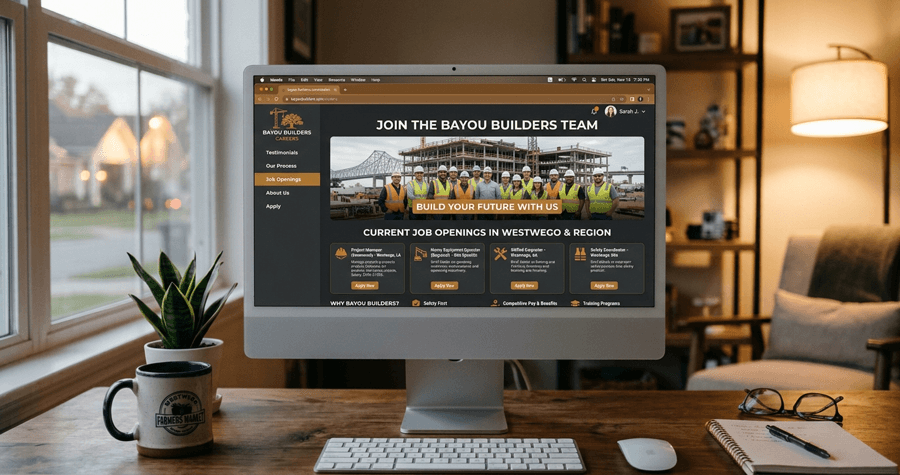
You don’t necessarily need a separate recruiting website to achieve better results. For many contractors, a thoughtfully developed Careers section on the company website is an excellent starting point. However, companies recruiting large numbers of employees or participating in highly competitive labor markets might benefit from a dedicated Careers subdomain or website.

The lesson is that recruiting deserves the same strategic thinking and attention to the audience that contractors apply when pursuing new clients.

Show Candidates Why They Should Want to Work for You

Most construction job postings focus heavily on what the company wants from applicants. They include qualifications, responsibilities, required certifications, and years of experience. The company’s Careers page typically provides a generic paragraph about its culture followed by a list of benefits and available positions.

That’s necessary information, but it rarely creates a compelling reason to join the company.

Imagine marketing your construction services that way. You publish a list of everything you expect from clients, provide a generic description of your capabilities, and wait for the phone to ring. You probably wouldn’t win much negotiated work.

Recruiting needs to answer a more important question: Why would a qualified employee choose your company over another employer?

Start by defining your ideal employee. What qualities, attitudes, and ambitions make someone successful in your organization? Then identify what matters most to those people and what genuinely differentiates your company as an employer.

An experienced superintendent might value operational support, reliable subcontractors, autonomy, and leadership that makes decisions without unnecessary bureaucracy. A young project engineer might care more about mentorship, meaningful responsibility, training, and opportunities for advancement.

Office employees may also be considering careers outside construction. Your accounting, technology, administrative, and marketing professionals aren’t necessarily comparing your company only against other contractors.

Marketing needs to understand these audiences and develop messaging that speaks directly to their priorities.

Show real employees discussing their experiences, ideally through short videos. Feature project stories that explain what your teams accomplished and the people behind the work. Share photos of employees collaborating, solving problems, operating equipment, and celebrating milestones rather than relying entirely on finished-project photography.

Other evidence can help establish credibility. Employee tenure, safety performance, professional development opportunities, industry recognition, and workplace awards can reinforce your employer brand when they genuinely reflect the employee experience.

Thought leadership also plays a role. When your company consistently demonstrates expertise, innovation, and strong leadership, it can become more attractive to professionals who want to build their careers with respected organizations.

And don’t underestimate personality. Contractors often have distinct cultures, but you’d never know it from their websites or recruiting materials. Your recruiting content should help candidates understand what makes your company different, including who will thrive there and who might not be the right fit.

Stop Throwing Away Your Next Great Employees

Here’s another missed opportunity I’ve seen in construction recruiting: what happens to the qualified candidates you don’t hire?

Imagine interviewing more than ten people for a project manager position and identifying three to five strong finalists. You hire one. What happens to the others?

Frequently, nothing. The company closes the position, files away the applications, and starts searching from scratch when another position opens six months later.

Think about how differently your business development team would handle that situation. You wouldn’t identify several qualified prospective clients, win one project, and permanently stop communicating with the others.

So why do it with prospective employees?

I’ve worked with a contractor that maintained a separate customer relationship management (CRM) system specifically for job applicants. We developed an automated email workflow to check in quarterly with qualified candidates and maintain those relationships.

An applicant tracking system (ATS) can serve the same purpose, provided it supports candidate segmentation and ongoing communications.

For positions that contractors hire regularly, such as project managers, superintendents, and foremen, building a pipeline of qualified candidates can significantly reduce the effort required to start future searches.

The approach doesn’t need to be complicated. Maintain a list of promising candidates who weren’t selected, organize them by role and experience, and keep in touch with relevant company updates, career opportunities, and occasional personal outreach. Respect candidates’ communication preferences and make it easy to opt out.

Some of your best future employees may already be in your database.

Recruiting Gets Easier When Employees Want to Stay

There’s another reason Marketing and HR need to work together: recruiting and retention are closely connected.

A contractor struggling with employee turnover can easily find itself trapped in a cycle of constantly replacing people rather than building its workforce. Even an effective recruiting campaign won’t solve the underlying problem if employees continue leaving because of poor leadership, inadequate support, or an unhealthy culture.

Stop the bleeding, and recruiting becomes a much more manageable challenge.

Marketing often contributes to employee appreciation, internal newsletters, recognition programs, events, and communication initiatives. Those activities can help employees feel connected to the organization, particularly when teams are spread across jobsites and geographic markets.

But employee communications cannot compensate for a poor employee experience. The culture you’re marketing must be the culture employees actually experience.

This is where Operations becomes an essential partner. Project leaders and supervisors have an enormous influence on whether employees feel supported, valued, and motivated to stay.

When employees genuinely enjoy working for your company, they can become some of your most effective recruiters. Their referrals and personal stories can carry more credibility than corporate messaging because they come from people who experience the organization every day.

Recruiting, retention, and employer reputation reinforce one another. Construction companies should manage them as connected business priorities rather than unrelated departmental activities.

Make Recruiting Part of Your Marketing Strategy

You don’t need a separate recruiting department or a massive advertising budget to begin improving your results.

Start by bringing Marketing, HR, and Operations together to define the employees your company needs to attract. Identify the positions you hire most frequently, understand what motivates those candidates, and determine why someone should choose your company over its competitors.

Next, evaluate your Careers page and recruiting messages through the eyes of those candidates. Does your website communicate a distinctive culture and meaningful career opportunities, or does it look like every other contractor’s website? Begin replacing generic claims with employee stories, authentic imagery, and credible evidence.

Finally, establish a system for staying connected with qualified candidates. Use your ATS or CRM to maintain a talent pipeline rather than starting every search from zero. Coordinate recruiting content and employee advocacy with your broader marketing activities so the company is building awareness even when positions aren’t immediately available.

Measure more than the number of applications. HR and Marketing should evaluate the quality of candidates, the sources producing qualified applicants, and ultimately whether new employees succeed and stay.

Construction companies have spent decades learning how to distinguish themselves from competitors and become preferred contractors. Those same principles can help them become preferred employers.

The contractors that recognize recruiting as a marketing challenge, not simply an HR process, will be better positioned to compete for the people they need to grow.

Your next great employee may not be looking for a job today. The question is whether you’re giving them a reason to think about your company when they do.

Why Construction Companies Struggle to Attract Great Employees

Some construction companies offer excellent compensation, comprehensive benefits, and generous bonuses, yet still struggle to attract and retain good employees. Others develop a reputation for being such great places to work that employees encourage their friends, former coworkers, and even their children to join the company.

What’s the difference? It usually isn’t another dollar an hour or an extra week of vacation.

The construction industry’s workforce challenges are well documented. According to the 2026 AGC and NCCER Workforce Survey, 88% of contractors with open craft positions reported that filling those positions was as difficult or more difficult than the previous year. Among contractors with salaried openings, 87% reported similar challenges.

Labor shortages are a legitimate problem, but they don’t fully explain why certain contractors consistently attract better employees than their competitors.

After more than two decades working with construction companies, I’ve noticed a common characteristic among contractors that attract and retain great employees: People are proud to work there.

Their employer’s reputation becomes a badge of honor. Employees know the company produces quality work, prioritizes safety, respects its people, and takes care of them. That pride creates something recruiting advertisements and signing bonuses struggle to replicate.

A magnetic employer brand.

The Highest-Paying Contractor Doesn’t Always Win

Competitive compensation is important. Construction employees have bills to pay, families to support, and financial goals to achieve. Contractors that consistently underpay their people shouldn’t expect a clever marketing campaign to compensate for it.

But I’ve also seen contractors with some of the best compensation struggle with high employee turnover. Their challenge wasn’t necessarily what appeared on employees’ paychecks. It was what employees experienced every day.

Maybe the company had an abrasive executive who constantly undermined managers. Perhaps project teams were expected to accommodate unreasonable clients without adequate support from leadership. Or employees were treated as replaceable resources instead of respected professionals.

I’ve worked at a midsized company that had a Chief People Officer who spent considerable time trying to compensate for an abrasive, tyrannical COO. From what I observed, many employees who resigned did so because of his behavior.

Think about that situation. The company invested in a senior executive responsible for its people, yet another senior executive was contributing to the very problem she was trying to solve.

No amount of employer-brand advertising could fix the underlying leadership issue.

Research reinforces the importance of management. Gallup’s employee engagement research has found that managers account for at least 70% of the variance in team engagement. While employee engagement involves more than retention, the finding underscores how much day-to-day leadership influences the workplace experience.

Construction CEOs should pay particular attention to this because employees often spend more time interacting with project executives, superintendents, and immediate supervisors than with corporate leadership.

A company can have excellent executive values, generous benefits, and an attractive office, but if the project executive makes everyone’s life miserable, that’s the culture those employees experience.

Your Employer Brand Is the Reputation You’ve Earned

Employer branding is frequently misunderstood as creating a recruiting slogan, redesigning the Careers page, or producing videos of happy employees.

Those are marketing tools. Your employer brand is something deeper.

It’s what employees tell their friends about working for your company. It’s what former employees say when someone asks whether they should apply. It’s what subcontractors think about your leadership and project teams. And it’s what prospective employees believe about your reputation before they ever visit your website.

The strongest construction employer brands are often extensions of the company’s broader reputation. Contractors known for quality craftsmanship, strong safety programs, ethical leadership, and professionalism already have valuable attributes that appeal to prospective employees.

But those attributes must be reflected in the employee experience.

I worked with a heavy civil contractor that had an exceptional approach to employee appreciation and safety. As part of its safety recognition program, the company gave away a truck to an employee.

That alone would have been an impressive prize. But what made the program memorable was that the contractor also covered the taxes, license, registration, and associated income tax impact so the employee wouldn’t face an unexpected financial burden from winning.

The leadership team understood that giving someone a truck and leaving them with a substantial tax bill wasn’t necessarily taking care of that employee.

The same company encouraged employees to recommend operational improvements and contribute ideas for doing things better. Innovation wasn’t simply a claim in its marketing materials. Employees were invited to participate in improving the business.

Those behaviors communicated something much more meaningful than a recruiting slogan.

They demonstrated how the company valued its employees.

Great employer brands are built through thousands of decisions like these, many of which never become public marketing campaigns.

When Employees Bring Their Children to Work, Pay Attention

One of the strongest indicators I’ve encountered of a healthy construction culture is multigenerational employment.

I’m not talking about multigenerational ownership, which is common throughout the industry. I’m talking about families where parents, children, grandchildren, and sometimes great-grandchildren have worked for the same contractor.

I’ve worked with several contractors with multigenerational employees. In two cases, I saw employee families whose relationships with the ownership families extended across three or four generations.

Think about what that says about the company.

An employee might tolerate difficult working conditions or make personal sacrifices because they need to provide for their family. But they’re far less likely to encourage their children to join an organization they believe is unsafe, disrespectful, or indifferent to employees’ well-being.

When someone who’s spent 20 or 30 years working for a contractor encourages their son or daughter to build a career there, that’s a powerful endorsement.

It doesn’t mean the company is perfect, and family employment alone isn’t proof of a healthy culture. But it’s a meaningful signal that employees trust the organization enough to recommend it to people they care about most.

This is where employee referrals become particularly valuable. An employee who genuinely believes in the company has credibility that corporate recruiting materials simply cannot manufacture.

The same principle applies to former employees. When people leave on good terms, recommend the company to others, or eventually return, they reinforce the organization’s reputation as a desirable employer.

Contractors should pay attention to these relationships and celebrate them. Long-tenured employees, multigenerational employment, successful referrals, and employees who have advanced through the company are excellent stories to share.

They provide evidence of an employer brand that extends beyond marketing claims.

Don’t Forget the People Waiting at Home

There’s another audience construction executives often overlook when thinking about recruiting and retention: employees’ families.

Spouses and partners can have tremendous influence over employment decisions, particularly in construction trades where schedules, travel, and physical demands affect the entire household.

A superintendent’s spouse may be weighing the financial benefits of a new opportunity against additional travel. A craft employee’s family may be concerned about safety, job stability, or unpredictable schedules. These considerations can influence whether someone accepts an offer or remains with an employer.

I’ve often seen spouses working in construction offices while their husbands work in the field, particularly in smaller communities. Those relationships can provide insight into how the company affects employees’ families, provided leaders listen respectfully rather than treating family members as an informal information network.

Construction companies can recognize families in practical ways. Share newsletters that highlight employees’ accomplishments and projects. Invite families to company picnics and holiday events. Recognize spouses and partners for the support they provide. Address questions about travel, safety, schedules, and benefits in recruiting communications.

Sometimes relatively small gestures create lasting impressions.

When I worked at My IT, a technology company, we recognized that many of our technicians had families at home and that their spouses were also affected by demanding work schedules.

I suggested a program we called No Cook Wednesday. The company purchased family-sized meals for employees to take home, giving their households one evening without having to prepare dinner.

The response was remarkable. One wife cried when she received the meal, and several families sent thank-you notes.

It wasn’t an expensive executive retreat or an elaborate employee appreciation campaign. It was a relatively simple gesture that acknowledged the people supporting our employees outside of work.

Construction companies could apply the same thinking, particularly during demanding project schedules, extended travel assignments, or peak construction seasons.

The important thing isn’t the meal itself. It’s understanding what employees and their families value and demonstrating that the company cares about their well-being.

Of course, appreciation programs can’t compensate for consistently unreasonable expectations or poor working conditions. A gift doesn’t make up for missing every family event because management refuses to address staffing or scheduling problems.

But thoughtful gestures, supported by a genuinely respectful culture, help reinforce the relationships that make people want to stay.

Stop Saying You’re a Family. Start Acting Like a Great Employer.

One employer-branding phrase I would happily retire from the construction industry is “We’re a family.”

I hear it constantly, especially from multigenerational family-owned contractors. But having several generations of family ownership doesn’t automatically mean employees experience a supportive workplace.

And frankly, employees don’t need another family. They need an employer that respects them, compensates them fairly, communicates honestly, provides opportunities, and treats them like valued members of the team.

The distinction matters because companies sometimes confuse employee appreciation with employee experience.

A contractor can host an impressive Christmas party, sponsor fishing tournaments, and hand out expensive company merchandise while tolerating abusive managers and unreasonable expectations.

Those activities may be appreciated, but they don’t create a healthy culture by themselves.

The best contractors I’ve worked with demonstrate their values through consistent behaviors. They invest in training, communicate openly, encourage employee involvement, and make decisions with a long-term perspective.

They also have distinct personalities. Some are entrepreneurial and innovative. Others are disciplined, highly structured organizations where employees appreciate predictability and consistency. Some emphasize individual accountability, while others are particularly collaborative.

There’s no single personality that makes a construction company a great employer. The objective is to develop a culture that’s authentic, consistently reinforced, and attractive to the people who are most likely to thrive there.

Your company’s marketing should communicate that personality rather than relying on generic claims about teamwork, excellence, and being a family.

Before Spending More on Recruiting, Ask Why People Leave

When a contractor struggles with recruiting, leadership often assumes the solution is more advertising, higher compensation, or another recruiter.

Sometimes those investments are necessary. But before spending more money attracting employees, executives should understand why their current employees stay, consider leaving, or resign.

Start by talking to the people who know the company best.

Ask your strongest employees what they value most about working there and what might cause them to leave. Speak with recently departed employees to identify recurring frustrations. Ask candidates who declined job offers what influenced their decisions. Where appropriate, invite spouses and families to provide voluntary feedback about how work affects their households.

Don’t limit these conversations to annual employee satisfaction surveys. An employee who fears retaliation may never provide honest criticism through a company-administered questionnaire.

Use confidential feedback methods when appropriate, look for consistent patterns, and make it clear that candid input won’t be punished.

One question I particularly like is: “Have you considered leaving in the past year? If so, what made you think about it?”

That question can surface issues long before an employee submits a resignation.

The next step is more important than the survey itself. Leadership needs to address the problems it can fix and communicate what it’s doing about the others.

If employees consistently complain about poor project planning, inadequate resources, excessive travel, or a particular manager, those aren’t necessarily HR problems. They’re often operational or executive leadership problems.

Marketing can help communicate improvements and share the positive aspects of your employee experience. HR can support the listening process, employee development, and retention initiatives. But executives and operations leaders must take responsibility for fixing the underlying conditions.

That’s how a stronger employer brand develops.

Construction companies that want to attract great employees should stop thinking about employer branding as something that happens only when they’re hiring.

It’s built through leadership decisions, project experiences, employee relationships, and the reputation those experiences create over time.

Competitive compensation gets your company considered. A compelling employer brand makes people want to join, stay, and recommend you to others.

Before spending another dollar promoting your company as a great place to work, find out whether your best employees agree.

Your Careers Page Is Costing You Qualified Applicants

Your construction company might have an impressive website. Beautiful project photography, detailed market expertise, award-winning projects, and hundreds of millions of dollars in completed work. Everything is designed to convince prospective clients that you’re the right contractor for their next project.

But what does that same website tell someone who’s considering working for you?

If your Careers page is buried in the footer and consists of a generic paragraph about competitive benefits followed by a list of job openings, you’re sending prospective employees a message. And probably not the one you intended.

After more than 20 years working in construction marketing, I’ve reviewed hundreds of contractor websites. Too many smaller and midsized companies treat their Careers pages as an administrative necessity rather than a recruiting asset. Even among larger contractors, the quality of the employee experience can vary considerably.

The worst offenders don’t have a Careers page at all. That sends an unfortunate message to prospective employees: attracting future team members isn’t important enough to deserve space on the website.

This isn’t simply a website design issue. It’s a business problem that can cost contractors qualified candidates, increase recruiting expenses, and make an already difficult labor market even more challenging.

According to the 2026 AGC and NCCER Workforce Survey, 88% of contractors with craft openings reported those positions were as hard or harder to fill than the previous year. Among contractors with salaried openings, 87% reported the same challenge.

When finding qualified employees is this difficult, contractors can’t afford to lose interested candidates because their websites fail to answer basic questions or make applying unnecessarily difficult.

Your Website Sells to Clients but Ignores Future Employees

Construction companies understand the importance of knowing their ideal clients. They research target markets, identify decision-makers, understand buying motivations, and develop marketing messages that speak to those audiences.

Yet when it comes to prospective employees, many contractors abandon that discipline entirely.

Their Careers pages are company-focused rather than candidate-focused. They talk about the organization’s history, accomplishments, values, and growth without explaining what any of those things mean to someone considering a career there.

Imagine visiting a contractor’s website as an experienced superintendent. You want to know what projects the company builds, how its operations teams function, whether leadership supports its field employees, and what opportunities exist for your career. Instead, you find a paragraph about being a family-oriented company and a button to view open positions.

Why would that convince you to leave a good job?

The same principle applies to project managers, estimators, accountants, and marketing professionals. These candidates aren’t simply evaluating job openings. They’re comparing potential employers, and many office professionals are considering opportunities outside construction altogether.

Your Careers page needs to speak directly to their interests, ambitions, and concerns.

That starts with defining your ideal employees and understanding what makes your company attractive to them. Showcase the people they’ll work alongside, the projects they’ll help build, the opportunities they’ll have to develop professionally, and the culture they’ll experience every day.

Don’t just tell candidates you’re a great company. Give them reasons to believe they’d enjoy working there.

Mediocre Careers Pages Make You Look Like Every Other Contractor

There’s nothing inherently wrong with listing benefits and available positions. Candidates need that information. The problem is when that’s practically everything your Careers page offers.

I’ve encountered this repeatedly throughout my career. The same generic claims about competitive compensation, comprehensive benefits, a family atmosphere, and opportunities for advancement appear on one contractor’s website after another.

It’s the employer-branding equivalent of claiming your construction company delivers quality projects on time and within budget.

Those things are expected. They don’t explain why someone should choose you.

A more compelling Careers page demonstrates your culture through real employees, authentic photographs, and stories about what makes working for your company different.

Show a project manager explaining how leadership supported their career advancement. Feature a superintendent discussing the company’s approach to safety and project execution. Include photographs of crews collaborating, solving problems, and celebrating accomplishments rather than relying exclusively on pictures of completed buildings.

Employee testimonials are particularly useful when they represent the positions you frequently hire. Video testimonials can be even more effective because prospective employees get to see and hear the people they might eventually work with.

Your project portfolio can also become an important recruiting tool. Don’t simply showcase a completed hospital, bridge, or manufacturing facility. Explain what made the project challenging and highlight the employees who helped deliver it.

Great employees often want to work on great projects with people they respect. Your website should give them a glimpse of both.

And please, show some personality. Your company’s culture should be recognizable in its recruiting materials rather than disappearing behind generic corporate language.

Tell Candidates What Working There Actually Means

One of the biggest mistakes contractors make is failing to provide an honest picture of the employee experience, particularly for field positions.

Construction work is less predictable than many office jobs. Project locations change, schedules fluctuate, weather creates challenges, and some positions require considerable travel.

These aren’t necessarily negatives. Some employees enjoy traveling, working in different locations, and taking on challenging assignments. Others want to be home with their families every evening.

Neither candidate is wrong, but only one might be the right fit for a position involving extensive travel.

Contractors need to be transparent about these expectations rather than hiding inconvenient details until the interview process. Misrepresenting the position might generate additional applicants, but it can also waste everyone’s time and contribute to higher turnover.

For field positions, explain where your projects are located, whether overnight travel is required, what typical schedules look like, and how compensation accounts for travel. Clarify who provides tools, equipment, and vehicles, whether per diem or travel stipends are available, and what other expenses employees are expected to cover.

Candidates should also understand their professional development opportunities. Is there a formal apprenticeship or training program? Can a skilled tradesperson advance without moving into management? Are there opportunities to become a technical specialist, trainer, or subject matter expert?

Not everyone wants to supervise people. A strong employer recognizes that technical expertise and craftsmanship can be valuable career paths in their own right.

Safety deserves particular attention. A well-developed Safety page is an excellent companion to a Careers page because it provides evidence of how the company protects its employees.

And remember, prospective employees aren’t always the only people researching your organization. Spouses and family members often influence employment decisions, particularly when travel, physical risk, and unpredictable schedules are involved.

A spouse evaluating your contractor may pay as much attention to its safety practices and travel expectations as the candidate does to compensation.

Give both audiences the information they need to make an informed decision.

Stop Making Candidates Jump Through Hoops

Even when a contractor does a good job attracting candidates, the application process can create unnecessary barriers.

Someone finds an appealing opportunity on your website, clicks Apply, and gets redirected to a third-party hiring system. They’re required to create an account, upload a résumé, and then manually enter information that’s already in the document.

For experienced professionals, that’s frustrating. For field employees who may be applying from a smartphone and don’t have a formal résumé, it can be enough to abandon the process.

Your application should be appropriate for the position and easy to complete on a mobile device.

A project manager may be comfortable providing a résumé and detailed employment history. An experienced equipment operator or foreman may be better served by a shorter initial application that captures contact information, relevant experience, certifications, and geographic preferences.

HR can gather additional information during screening and subsequent stages of hiring. The objective isn’t to eliminate necessary qualifications or compliance requirements. It’s to avoid asking candidates for information that isn’t needed at that point in the process.

Contractors should also pay attention to the experience after an application is submitted.

At a minimum, candidates should immediately receive confirmation that their application was received, along with an explanation of the hiring process and what happens next.

If interviews are ongoing or decisions are delayed, communicate that. Even a brief update explaining that the company is still evaluating candidates demonstrates respect for their time.

And when you hire someone else, close the loop with the remaining applicants.

I’ve seen too many companies send an initial acknowledgment and then disappear. That damages the candidate experience and potentially the company’s employer reputation, especially in an industry where professional networks are closely connected.

Stop Throwing Away Qualified Candidates

Here’s a recruiting expense that construction executives rarely consider: the value of candidates who applied but weren’t hired.

Imagine your company advertises a project manager position, screens numerous applicants, interviews several qualified candidates, and ultimately hires one person.

What happens to the other finalists?

If your recruiting process consists primarily of emails and spreadsheets, those candidates often disappear into old inboxes and files. Six months later, when another project manager position opens, the company starts the entire recruiting process over again.

That’s an expensive way to operate.

I worked with a contractor that maintained a separate CRM specifically for applicants. We developed an automated workflow to check in quarterly with qualified candidates, keeping the company connected to people who might be a good fit for future opportunities.

An applicant tracking system (ATS) can accomplish the same thing. The important part is having a process for organizing prospective employees, tracking their qualifications, and maintaining appropriate contact after the initial hiring decision.

Your Careers page should support that process by allowing interested professionals to join your talent network even when a suitable position isn’t currently available.

This approach can create significant financial opportunities.

Construction companies can spend thousands of dollars monthly advertising openings on job boards, while external recruiter placement fees for experienced management positions can run into the tens of thousands of dollars.

Consider a contractor that avoids two external recruiter placements at $30,000 each and four months of job-board advertising at $10,000 per month by successfully hiring through its existing candidate pipeline.

That’s $100,000 in potential gross recruiting expenditures avoided.

This is an illustrative scenario, not a guaranteed savings estimate. Results depend on hiring volume, positions, actual recruiting costs, and how effectively the company maintains its candidate database. Managing the pipeline also requires resources.

Still, it demonstrates why developing relationships with prospective employees deserves attention. Over a year or two, a contractor that consistently builds its talent pipeline may become less dependent on expensive outside recruiting channels.

Treat qualified candidates the way your business development team treats qualified prospective clients. Stay connected, provide relevant information, and make it easy to restart the conversation when the timing is right.

Find Out Where Your Website Is Losing Applicants

Most construction companies can tell you approximately how many people applied for an open position. Far fewer can explain how many prospective employees visited the Careers page or what happened before those applications were submitted.

That makes it difficult to diagnose recruiting performance.

Marketing and HR should begin with a few basic website measurements: Careers page visits, average engagement time, bounce rate, and completed applications.

Visits show how much traffic the Careers page receives. Engagement time can help indicate whether candidates are exploring the content. Bounce rate may reveal sessions with limited interaction, although it should be interpreted in context rather than treated as a direct measure of candidate interest.

Most importantly, completed applications show whether visitors are taking action.

If possible, also track clicks to job listings, application starts, and application completions. If your ATS sends candidates to another website, coordinate tracking between the systems so you don’t lose visibility when they leave your company website.

A contractor attracting substantial Careers page traffic but relatively few applicants may have a messaging, relevance, or application-friction problem. A contractor receiving very little traffic may need to improve how it promotes employment opportunities through social media, referrals, job boards, and other channels.

Website metrics won’t explain everything, and more applications don’t necessarily mean better recruiting. HR should also evaluate whether the applications are coming from qualified candidates.

But without basic measurement, contractors are making recruiting decisions with incomplete information.

Take the Five-Minute Careers Page Test

Here’s a simple exercise for your next leadership meeting.

Ask someone who isn’t familiar with your company’s hiring process to visit your website on their smartphone and pretend they’re considering an available position.

Can they quickly understand why your company would be a good place to work? Can they find relevant opportunities, learn what the work involves, and get answers to their most important questions? Can they begin applying without unnecessary frustration?

Better yet, ask recent hires what they thought about your website and application experience. Find out what information they wanted but couldn’t find, what almost prevented them from applying, and what ultimately convinced them to pursue the opportunity.

Then use that feedback to make improvements.

Contractors spend considerable time and money making sure their websites appeal to prospective clients. It’s time to give prospective employees the same level of attention.

Your next great superintendent, project manager, estimator, or foreman might already be visiting your website.

The question is whether you’re giving them a reason to apply or a reason to leave.


Is Your Construction Careers Page Doing Its Job?

We’ve developed a visual guide covering the 12 essential elements of an effective construction Careers page, from employee value propositions and testimonials to career advancement, safety, and application experience.

Download Deconstructing Great Construction Websites: Careers Edition and use it with your marketing, HR, and leadership teams to identify opportunities to attract better employees.

Download the Free Careers Page Infographic

How to Measure the ROI of Recruitment Marketing

Imagine your construction company’s marketing team launches a recruiting campaign that generates 200 job applications. Everyone celebrates the response, and Marketing presents the results as a success.

Then HR reviews the applicants and discovers that only five meet the qualifications for an interview.

Meanwhile, another campaign produces just 20 applications, but eight candidates qualify for interviews, four receive job offers, and three accept.

Which campaign performed better?

Too many contractors measure recruiting success by how many applications they receive rather than how effectively they attract and hire qualified employees.

It’s similar to measuring business development success by the number of proposals submitted instead of projects won and their profitability. Activity matters, but outcomes determine whether the investment was worthwhile.

After more than 20 years in construction marketing, I’ve worked with contractors to measure applications, qualified candidates, employee referrals, retention, and tenure. These measurements reveal much more about recruiting performance than application volume alone.

And when Marketing and HR share that information, they can connect recruiting efforts to hiring costs, employee retention, and the company’s employer brand.

Measure Qualified Applicants, Not Just Applications

Construction’s workforce shortage isn’t simply about finding people who want jobs. It’s about finding people with the right experience, qualifications, and expectations.

According to the 2026 AGC and NCCER Workforce Survey, half of responding contractors reported that available candidates lacked the necessary skills, certifications, or licenses.

That’s why qualified applicants should be your first measurement.

Before advertising a position, HR and the hiring manager should agree on what makes someone qualified for an interview. A project manager might need experience with specific project types, contract values, and delivery methods. A skilled tradesperson might need relevant certifications, field experience, and geographic availability.

Marketing can then develop recruiting messages that attract those candidates rather than trying to appeal to everyone.

Calculate your qualified applicant rate by dividing qualified applicants by completed applications. If 100 people apply and 25 qualify for interviews, your rate is 25%.

Track this by position and recruiting source. A campaign producing fewer applications but significantly more qualified candidates may be substantially more valuable.

Understand What Recruiting Actually Costs

Most construction executives know recruiting is expensive. What they often don’t know is how those costs compare across recruiting channels.

I’ve seen contractors spend $3,000 to $10,000 monthly advertising positions on job boards. External recruiter fees for experienced professionals can reach $20,000 to $50,000 per placement, depending on the position and agreement.

HR often already knows the company’s typical advertising expenses and recruiter fees. Some contractors even establish an average recruiting budget for each position.

Start with those numbers and calculate two measurements.

Cost per qualified applicant divides recruiting expenditures by the number of candidates qualified for interviews. If a contractor spends $5,000 advertising a superintendent position and attracts ten qualified candidates, the cost per qualified applicant is $500.

Cost per hire divides recruiting expenditures by the number of employees hired. If that same campaign produces two hires, the direct recruiting cost per hire is $2,500.

Track advertising, recruiter fees, referral bonuses, and other direct expenses. For a more comprehensive analysis, include allocated recruiting staff time, hiring manager time, and technology expenses.

The objective isn’t necessarily to minimize spending. It’s to understand which investments consistently produce qualified employees at a reasonable cost.

Measure Organic Recruiting and Employee Referrals

One of the strongest indicators of a magnetic employer brand is the company’s ability to attract qualified candidates without continually paying to reach them.

These candidates might discover your company through organic search, social media, thought leadership, employee stories, or its reputation in the construction community. Others visit your Careers page directly because they already want to work for you.

Marketing can influence this interest by shifting recruiting messages from company-focused to applicant-focused. Even small changes, such as referring to employees as team members or using a distinctive branded name for the workforce, can make the company feel more personal and approachable.

Promoting employee tenure, advancement opportunities, and multigenerational employment also reinforces the message that people choose to build careers there.

Track the number and percentage of qualified applicants and new hires coming from organic channels. Separate employee referrals into their own category so you can evaluate their effectiveness.

Employee referrals can be particularly valuable in construction, where professionals frequently know one another through projects and industry relationships.

I like using a three-stage referral incentive program:

  • $50 gift card or company store credit when a referred candidate applies and qualifies for an interview.
  • $2,000 bonus when the referred candidate is hired.
  • $5,000 additional bonus after the employee completes one year.

That’s a potential $7,050 investment in an employee who joins and stays for a year. Compared with a $30,000 external recruiter fee, it can be an attractive alternative.

The amounts should reflect the position, labor market, and recruiting economics. HR should also establish clear eligibility and payment rules to prevent abuse.

Measure qualified referrals, referral hires, cost per referral hire, and one-year retention. You may discover that your best recruiters are already on your payroll.

Track Hiring Speed and Offer Acceptance

Two additional measurements help reveal whether your company is becoming an employer candidates genuinely want to join.

Time-to-fill measures the number of days between opening a position and a candidate accepting the offer. Track it by role because recruiting a project executive is different from filling an entry-level position.

I’ve seen contractors improve their employer branding and Careers pages, then fill positions faster because candidates were more interested in joining the organization.

Offer acceptance rate measures the percentage of job offers candidates accept. If you extend ten offers and six candidates accept, your acceptance rate is 60%.

I’ve worked with contractors that tracked this metric as they improved their brands and recruiting experiences. More candidates wanted to work there, resulting in higher offer acceptance and faster hiring.

Of course, Marketing can’t take all the credit. Compensation, interview experiences, management, and competing offers influence these outcomes.

But improving both measurements can signal that your company is becoming a more desirable employer rather than simply generating more applications.

One-Year Retention Is the Ultimate Test

Hiring someone isn’t the end of recruiting. A contractor that fills 20 positions but loses half those employees within a year hasn’t necessarily solved its workforce problem.

That’s why I recommend one-year retention as the primary long-term measurement of recruiting success.

Track the percentage of new hires who remain employed after 12 months, and compare results by recruiting source, role, and department. Evaluate completed hiring cohorts so recent hires don’t distort the measurement.

You may discover that referrals stay longer than employees recruited through job boards, or that certain recruiting channels produce stronger results for specific positions.

However, don’t confuse recruitment problems with leadership problems.

If employees leave because of an abusive manager, unreasonable schedules, or inadequate operational support, Marketing may have attracted excellent people whom the company failed to retain.

HR, Marketing, and Operations need to review retention together to distinguish poor hiring matches from problems with the employee experience.

Reducing turnover can do more to improve recruiting economics than simply increasing the number of applicants.

Build a Shared Recruitment Marketing Scorecard

One of the most common problems I’ve encountered is the disconnect between Marketing and HR data.

Marketing sees website traffic, advertising performance, and applications. HR sees interviews, hiring decisions, recruiting costs, and retention. Neither department necessarily understands the complete recruiting funnel.

Where possible, integrate your applicant tracking system (ATS) with your CRM or reporting dashboards. A smaller contractor can start with a shared spreadsheet rather than investing in additional technology.

I recommend seven core measurements:

Measurement What It Reveals
Qualified applicants Are we attracting people worth interviewing?
Cost per qualified applicant How efficiently are we attracting them?
Cost per hire What does filling a position cost?
Organic and referral hires How much is our reputation helping?
Time-to-fill How quickly can we staff positions?
Offer acceptance rate Do candidates want to join?
One-year retention Are we hiring people who stay?

Review the results monthly, with deeper quarterly and annual evaluations. Compare performance by position and recruiting source wherever practical.

Marketing shouldn’t celebrate applications HR can’t use, and HR shouldn’t evaluate recruiting performance without considering how candidates are attracted and treated.

Both departments should be working toward the same business outcomes.

What Does Recruitment Marketing ROI Look Like?

Consider a midsized commercial contractor that frequently uses external recruiters to fill project management and field leadership positions.

Marketing proposes investing $20,000 in improving the Careers page, developing employee stories, and building a pipeline of prospective candidates.

Over the following year, the contractor hires two qualified employees through its referral program instead of external recruiters.

Assume each recruiter placement would have cost $30,000.

Investment or Savings Amount
Two recruiter fees avoided $60,000
Recruitment marketing investment ($20,000)
Two referral incentive packages ($14,100)
Net potential savings $25,900

That’s approximately a 76% return on the $34,100 invested in marketing and referral incentives.

This is an illustrative scenario, not a documented client result or guaranteed return. It assumes both positions would otherwise have required paid recruiter placements, excludes additional internal costs, and includes referral bonuses payable after one year.

Other contractors might realize savings through reduced job-board spending, faster hiring, or fewer repeated vacancies. Those benefits should be measured separately and included only when reasonably documented.

The example demonstrates how a relatively modest recruiting marketing investment can potentially produce a meaningful financial return.

Better Recruiting Starts with Better Measurement

Construction executives have become increasingly sophisticated about measuring business development. They track pursuits, hit rates, awarded contracts, backlog, and profitability because those numbers guide business decisions.

Recruiting deserves similar attention.

Marketing should understand which messages and channels attract qualified candidates. HR should measure hiring outcomes and recruiting costs. Operations should help evaluate employee performance and retention.

Start with the information you already have, connect the data, and identify which investments consistently produce employees who succeed and stay.

The real return on recruitment marketing isn’t how many people apply. It’s how many of the right people join your team, what it costs to attract them, and how long they choose to stay.