
 Somewhere this Christmas, a construction company’s marketing coordinator will spend an hour creating a graphic that says, “Merry Christmas from Our Team!”
It will feature a stock photo of a Christmas tree, perhaps with a hard hat or company logo awkwardly added. They’ll publish it on LinkedIn, collect a handful of likes from coworkers, and check another item off the marketing calendar.
Meanwhile, I recently ran into a former client who told me she still has a terrarium I gave her for Earth Day more than 12 years ago. It’s sitting on her office bookcase.
That’s the difference between acknowledging a holiday and creating a memorable brand experience.
I’ve spent more than 20 years marketing architecture, engineering, and construction companies, and I’ve experimented with everything from custom Christmas cards to construction-themed gifts and elaborate holiday campaigns. Some were surprisingly successful. Others received less attention than I hoped, despite the creative effort involved.
But they reinforced an important lesson: Holiday marketing shouldn’t be about checking boxes. It should create experiences that help people remember your company and strengthen their relationships with it. Sometimes the best holiday for your contractor isn’t Christmas at all.
Should Contractors Post Happy Thanksgiving and Merry Christmas on Social Media?
I’m not a fan of generic holiday social media posts, especially for construction companies. Think about your audience: On Christmas morning, are construction executives, developers, architects, and project managers really waiting to see whether their favorite contractor wishes them Merry Christmas on LinkedIn?
Probably not. You’re not Disney or Hallmark, and people aren’t following your company for holiday entertainment. That doesn’t mean you should never post about Thanksgiving, Christmas, or other holidays, but there’s a difference between sharing something meaningful and publishing something because the calendar says you’re supposed to.
If your company has a beloved holiday tradition, shares a community initiative, or wants to recognize employees who contributed throughout the year, that can be worthwhile content. A photograph of your actual team celebrating together communicates more personality than a generic stock image. A thoughtful Thanksgiving message from the president can reinforce relationships, and a simple Christmas message can be meaningful when it reflects the company’s culture.
But if you’re going to publish something, make it worth seeing.
What About Getting Creative?
Several years ago, I worked on a series called The 12 Days of Construction for REX Construction and REX Engineering. Rather than another generic greeting, we created construction-themed content inspired by the familiar holiday song.
We also developed a version for SuperDroid Robots. I even recruited an opera singer friend to perform it for a YouTube video. The campaigns were well received by the people who saw them, although they didn’t generate as much visibility as I’d hoped.
That’s an important distinction. A clever campaign isn’t automatically an effective campaign. You can develop an engaging concept and produce excellent content but still struggle to reach the intended audience.
If you’re going to invest in an elaborate holiday campaign, consider distribution. Can employees and leadership share it through their professional networks? Could it be featured in a newsletter, sent to clients, or supported by industry partners? And is the effort justified compared with other marketing priorities?
Creativity makes content memorable. Distribution gives people the opportunity to remember it. Sometimes a thoughtful photograph and a short message accomplish more than a complex production that consumes weeks of time.
The Best Holiday Might Be One Your Competitors Ignore
Most construction companies concentrate holiday marketing around Thanksgiving, Christmas, and New Year’s. These holidays are familiar and associated with appreciation, but they’re also crowded. Clients may receive dozens or hundreds of greetings, gifts, and seasonal messages in December.
If you want to stand out, consider an occasion more closely connected to your company’s expertise, values, or audience.
World Trenchless Day: An Opportunity to Build Authority
Consider a contractor specializing in horizontal directional drilling, underground utilities, or trenchless rehabilitation. World Trenchless Day celebrates the technologies and people behind underground infrastructure installation and rehabilitation with less surface disruption.
That’s a natural opportunity to demonstrate expertise, but posting “Happy World Trenchless Day!” isn’t enough. Instead, use the occasion to publish a project case study, feature a superintendent explaining a specialized method, invite municipal officials or engineers to visit a jobsite, or educate clients about the practical trade-offs in trenchless construction.
The holiday then becomes a platform for thought leadership. Rather than simply participating, the company contributes something valuable to the conversation and reinforces why it belongs in that market.
Earth Day: Making the Holiday Part of Your Brand
When I worked at Design the Planet, Earth Day was one of our most important annual celebrations. It fit the firm’s personality and values, so we embraced it and gave client gifts around Earth Day instead of competing with every other company in December.
That choice helped make the occasion part of our brand identity and allowed us to show appreciation when clients weren’t expecting another corporate gift. The strategy wasn’t about choosing an obscure holiday just to be different. Earth Day genuinely fit the company.
That’s the test I’d recommend for contractors: Does the occasion have a meaningful connection to your brand, employees, clients, or the communities you serve?
Labor Day can celebrate craftspeople who build our communities. Women in Construction Week can feature employees and career opportunities. Construction Safety Week can demonstrate real safety programs, people, and results.
There’s no magic number of holidays to observe. Choose the ones that fit your brand and audience, and make sure you have the capacity to promote them thoroughly. I’d rather see one meaningful campaign than 20 forgettable holiday graphics.
The Christmas Card That Took 20 Years to Get Noticed
 One of my favorite holiday marketing stories involves a roofing and siding contractor. For nearly 20 years, the company mailed Christmas cards to its clients. Then we replaced the traditional design with something distinctive.
We created a custom illustration of a gingerbread house built and decorated with candy materials, a playful interpretation of the company’s roofing and siding services. Team members signed the cards before mailing them.
The response was remarkable. Several clients commented that it was nice the company had started sending Christmas cards. Except it hadn’t just started. It had been sending cards for nearly two decades; clients simply hadn’t noticed them before.
The next year, we developed another gingerbread illustration featuring gingerbread workers wearing company-branded hard hats and safety vests while decorating the house. The cards connected the holiday to the contractor’s work and personality, making them recognizably from that company rather than another generic greeting.
That’s the difference between being seen and being remembered.
You Don’t Need a Construction Theme to Be Creative
 I used a similar approach for My IT, an information technology company. One card illustrated a computer keyboard with the keys rearranged to spell “My IT” with a red key carrying a Christmas tree. Another featured a Christmas wreath made from computer parts.
Neither required an enormous budget. They connected a familiar holiday to something distinctive about the sender. You could apply the same idea to a mechanical contractor, electrical contractor, heavy civil firm, or engineering company.
The goal isn’t necessarily to make the card funny or clever. It’s to make it authentic to the company and worth noticing. If you send cards, consider having employees sign them or including a handwritten note for important clients. A message about a shared project or partnership may mean more than an elaborate illustration by itself.
And if you’re looking for another way to stand out, consider New Year’s cards instead of Christmas cards. They’ll compete with fewer greetings.
Holiday Gifts: Unique Beats Expensive
In Choose Your Own Construction Marketing Journey, I dedicate an entire decision to client gifts. My philosophy is simple: A memorable $20 gift can be more valuable than a forgettable $200 gift.
I’ve received and distributed plenty of corporate merchandise over the years. Some was useful; other items were destined for a desk drawer, storage closet, or the trash. A gift shouldn’t feel like it came from leftover promotional inventory. It should communicate that someone gave the recipient a little thought.
The Terrarium That’s Still Around 12 Years Later
My favorite example is the Earth Day terrarium. We distributed terrariums as client gifts, which was unusual enough to get attention. But what made the gift special wasn’t simply the initial reaction. It had staying power.
More than 12 years later, a former client told me she still had hers displayed on an office bookcase. Think about the branded coffee mugs, holiday baskets, and promotional pens you’ve received over the last decade. How many can you remember?
That terrarium became a small, lasting reminder of the company and our relationship. I’m not claiming it directly generated a project or measurable revenue. It created a positive experience someone remembered for more than a decade, which matters in an industry where familiarity, trust, and reputation influence future opportunities.
Other Memorable Gifts I’ve Used
 A beeswax Christmas ornament that clients could display year after year.
- A custom-illustrated Labor Day poster celebrating construction professionals, paired with downloadable wallpapers for phones, tablets, and computers.
- The Earth Day terrarium, which became a long-lasting reminder of the relationship.
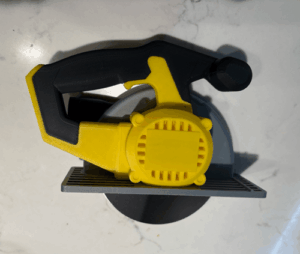
- A 3D-printed pizza cutter shaped like a circular saw, combining a household item with a playful construction connection.
None depended on an extravagant budget. They were memorable because they were unexpected, relevant, or distinctive. The gift doesn’t need to be expensive or complicated; it needs to give the recipient a reason to appreciate the gesture.
Don’t Forget the Entire Client Team
Construction companies often develop relationships with many people inside one client organization. An owner or developer may have executives, project managers, facilities professionals, and financial decision-makers involved in the relationship. Your appreciation strategy should reflect that.
Instead of one expensive gift for your main contact, consider something the broader team can enjoy. A basket of custom cookies shaped like excavators and bulldozers could be shared with employees in a client’s office. It feels playful and construction-related while giving several people the chance to experience the gesture.
Small gifts shared across multiple departments can sometimes reinforce more relationships than one gift to a senior executive. But don’t send gifts indiscriminately. Public agencies, procurement teams, and other clients may have restrictions on what employees can accept. Always respect those rules, especially during competitive procurement.
Sometimes a handwritten note, charitable initiative, or sincere recognition of the partnership is more appropriate than a physical gift. The objective is appreciation, never influencing an award decision.
Build a Gift Budget Around Relationships
I recommend organizing appreciation by relationship tiers rather than sending everyone the same thing. Your most important clients may warrant a handwritten note, custom item, or shared experience. Established clients may appreciate a smaller locally sourced gift or creative card, while broader relationships may be well served by a thoughtful, hand-signed message.
Consider important referral partners, architects, engineers, subcontractors, and others who contribute to your business. A regional specialty, handmade item, or gift reflecting a shared experience can feel more personal than ordinary logo merchandise.
The point isn’t to rank people by revenue alone, but to budget thoughtfully and make each gesture fit the relationship. Sometimes the most memorable gift isn’t even an object. I know an engineering firm that let clients choose a charity from an employee-selected list, then donated on their behalf.
The larger lesson is that appreciation doesn’t need to look the same for everyone.
Remember That Holiday Marketing Is Relationship Marketing
 Construction companies sometimes treat every marketing initiative as a near-term sales opportunity. Holiday marketing generally shouldn’t work that way. If you send a Thanksgiving card or an unexpected Earth Day gift to a client, the primary goal should be appreciation and retention, not another sales meeting.
The relationships developed during one project influence who gets considered for the next. A thoughtful gesture won’t overcome poor execution, missed schedules, or damaged trust. The company has to deliver on its promises first. But when it performs well, personal gestures can reinforce a positive experience and make the relationship more memorable.
That’s why I prioritize client retention over immediate sales when planning holiday marketing. A niche-holiday campaign may also build awareness and thought leadership among prospects, but that requires a different objective and distribution plan.
Decide what the initiative should accomplish before choosing what to create. Are you reinforcing relationships, recognizing employees, demonstrating expertise, helping a community, or creating a distinctive brand experience?
How Do You Know Whether Holiday Marketing Worked?
This is where executives should resist measuring everything through immediate revenue. A Christmas card probably won’t generate a directly attributable project, and an Earth Day gift shouldn’t be judged solely by the number of meetings it produces.
For appreciation, look for meaningful reactions. Did clients mention the gift, display it, keep it, or share a story? Did the gesture reinforce relationships with multiple people inside an important account?
For niche holidays, evaluate whether the content reached the right people. Did clients or prospects engage? Did industry partners share it? Did it lead to worthwhile conversations, educational opportunities, or site visits?
Always consider the resources required. An elaborate campaign that reaches few people may still help a specific relationship goal, but it may not justify repeating the same investment for broad awareness. That’s a lesson I took from The 12 Days of Construction: the creative was well received, yet a stronger distribution plan could have helped it reach more people.
Make Your Holiday Marketing Worth Remembering
Before adding another holiday to the calendar, ask whether the occasion fits your brand and audience. Can you create something distinctive rather than using another stock image? Are you supporting relationships, demonstrating expertise, recognizing employees, or building awareness? Do you have the time and resources to execute and distribute it properly?
There’s nothing wrong with wishing clients Merry Christmas or thanking employees at Thanksgiving. But there’s no requirement to publish a greeting simply because everybody else is doing it. Be selective, celebrate what matters, and make the experience fit your company.
I still think about clients who finally noticed a Christmas card after nearly 20 years of receiving them. And I’m proud of that Earth Day terrarium, still sitting on a bookcase more than a decade later. That’s the kind of lasting impression I want construction brands to create.
Your clients don’t need another holiday greeting. Give them something worth remembering.